flower delivery services Sydney

Category: Herringbone Tiles

Herringbone Tiles: Design Ideas, Layouts, and Modern Styling Tips for 2025


If you’re looking for a tile design that blends classic sophistication with modern flair, herringbone tiles should be at the top of your list for 2025. This pattern has been used for centuries in European architecture, but today it’s experiencing a major resurgence thanks to its geometric beauty, versatility, and ability to instantly elevate any room. Whether you want a bold feature wall, a stylish kitchen splashback, or a luxurious bathroom floor, herringbone tiles offer endless design possibilities that suit both traditional and contemporary homes.

This guide breaks down everything you need to know about herringbone tiles—from layouts and material choices to trending colours, design ideas, and expert styling tips for 2025.


What Makes Herringbone Tiles So Popular?

Herringbone tiles form a V-shaped zig-zag pattern that creates movement and visual interest. Unlike straight or stacked layouts, the herringbone pattern adds depth and direction, making a space feel more dynamic and thoughtfully designed.

Its popularity continues to grow because:

  • It enhances small spaces by drawing the eye along the pattern’s direction.
  • It adds personality without overwhelming the design.
  • It works with a wide range of tile materials and colours.
  • It brings a premium, high-end feel to both modern and traditional spaces.

Popular Herringbone Tile Layouts

While the herringbone pattern may look complex, there are several variations that work beautifully in different areas of the home. Here are the most common layouts and how they influence the overall aesthetic.

1. Classic 45-Degree Herringbone

This is the traditional pattern most people imagine. Tiles are laid at a 45-degree angle to the floor or wall, creating a striking zig-zag effect. It works beautifully for feature walls and splashbacks because it instantly becomes a focal point.

Best for: kitchens, bathroom feature walls, and fireplaces.


2. Straight Herringbone (90-Degree Pattern)

This version aligns the tiles at 90 degrees, creating a more structured and modern appearance. It feels sophisticated and slightly more contemporary than the classic angle.

Perfect for: floors, hallways, and minimalist interiors.


3. Double Herringbone

This bold layout uses two tiles per “leg” of the pattern, resulting in a chunkier and more dramatic look. It creates a statement and adds depth to larger spaces.

Best used in: open-plan kitchens, living rooms, and large bathrooms.


4. Diagonal or Vertical Herringbone

These layouts play with direction to create height or width illusions.

  • Vertical herringbone makes ceilings feel taller.
  • Horizontal herringbone widens compact rooms.
  • Diagonal herringbone adds movement and visual interest.

Popular Materials for Herringbone Tiles

Herringbone tiles come in various materials, each offering a different aesthetic and durability level. Here’s a look at the top materials trending in 2025.

1. Ceramic Tiles

Ceramic is budget-friendly, easy to clean, and perfect for walls. It comes in endless colours and finishes, making it an easy go-to for kitchens and bathrooms.

2. Porcelain Tiles

Loved for durability, porcelain tiles are moisture-resistant and ideal for high-traffic or wet areas. Porcelain herringbone tiles are popular for showers, bathroom floors, and even outdoor areas.

3. Natural Stone

Marble, travertine, limestone, and slate give the herringbone pattern a luxurious, earthy feel. These materials are more premium and require sealing, but they offer unmatched elegance.

4. Wood-Look Tiles

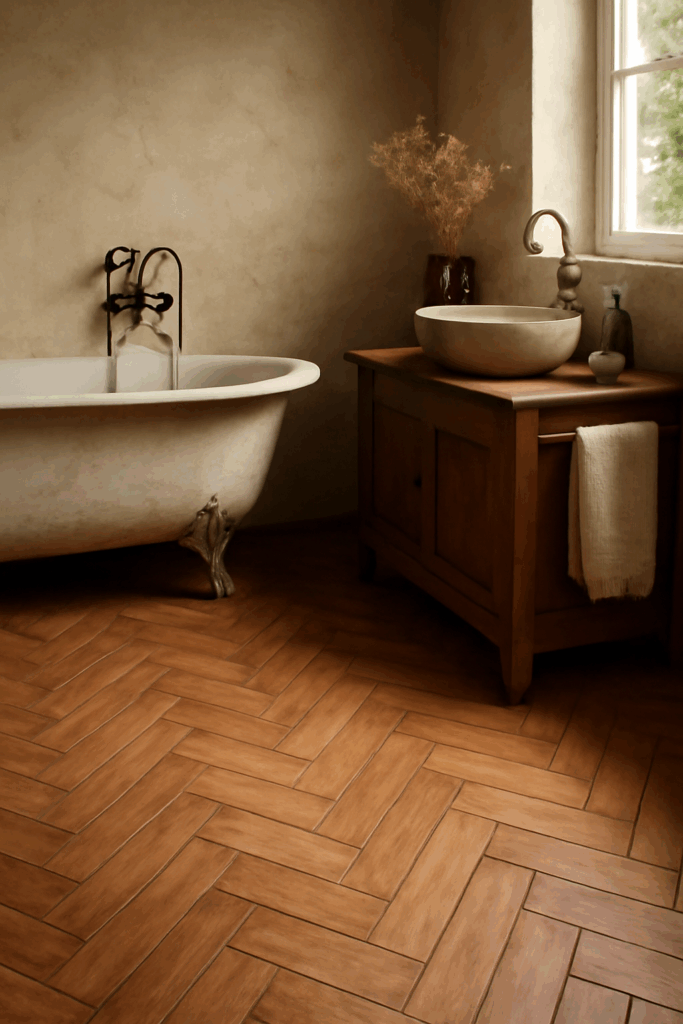
Wood-look porcelain tiles arranged in a herringbone pattern mimic traditional parquet flooring—without the maintenance issues of natural wood. Ideal for living rooms, hallways, and bedrooms.

5. Glass Tiles

Glass herringbone tiles brighten darker spaces and add a glossy, reflective finish. They’re perfect for splashbacks and shower niches.


Colours and Finishes Trending in 2025
Herringbone Tiles

As interior trends evolve, herringbone tiles have embraced new colours and textures that bring character to any room. Here are the top trending options for 2025.

1. Soft Neutrals

Beige, cream, taupe, and light grey remain top choices. These calming shades pair perfectly with minimalist, Scandinavian, or coastal interiors.

2. Earthy Greens

From sage to olive, green herringbone tiles bring a natural, grounding feel to kitchens and bathrooms. Green is one of the biggest tile colour trends of 2025.

3. Deep Blues

Navy and midnight blue tiles add richness and sophistication, especially when paired with brass fixtures.

4. Black and Charcoal

These dramatic shades create a bold, modern look. They work best with matte or satin finishes for a sleek feel.

5. High-Gloss White

No trend list is complete without classic glossy white tiles. They make rooms feel brighter and bigger while keeping the design timeless.

6. Textured or Handmade Look Tiles

Tiles with raw edges, natural variation, or handcrafted finishes add organic warmth to any herringbone design.


Best Places to Use Herringbone Tiles in the Home

1. Kitchen Splashbacks

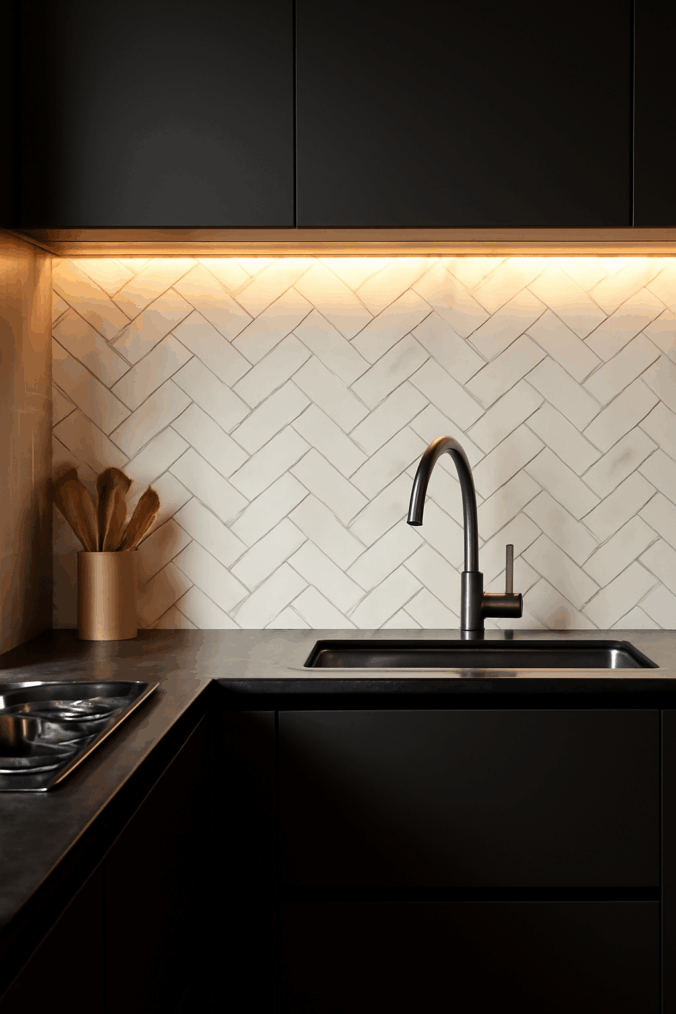
Herringbone splashbacks instantly elevate a kitchen’s look, whether you choose glossy ceramic tiles or bold colours. A 45-degree pattern is particularly eye-catching behind cooktops and sinks.


2. Bathroom Walls and Shower Areas

The upward movement of the herringbone pattern helps elongate small bathrooms. It works well for:

  • Shower walls
  • Behind vanities
  • Feature walls

Use porcelain tiles for moisture-prone areas to ensure durability.


3. Floors in Living Areas

Wood-look porcelain herringbone flooring is one of the hottest interior trends. It brings warmth and elegance but remains resistant to scratches, moisture, and temperature changes.


4. Entryways and Hallways

A herringbone tile floor creates a memorable entrance. Patterns can be laid to guide visual flow into the home.


5. Fireplace Surrounds

Herringbone tiles make a fireplace the star of the room. Marble or matte-black porcelain tiles are especially striking in modern homes.


Pros and Cons of Herringbone Tiles

Pros

✔ Adds timeless elegance
✔ Works with multiple interior styles
✔ Visually enlarges small spaces
✔ Creates movement and depth
✔ Available in many materials and colours
✔ Offers design flexibility through various layouts


Cons

✖ Installation can be more expensive due to complexity
✖ Requires precise measuring and alignment
✖ May create visual “busyness” in small spaces if colours are too bold
✖ Natural stone requires maintenance


Modern Styling Tips for 2025

1. Use the Pattern as a Feature, Not Everywhere

Herringbone looks best when it’s used as a feature wall or accent area. Overusing it can dilute its visual impact.


2. Play with Grout Colours

  • Light grout creates a subtle, seamless look.
  • Dark grout adds contrast and highlights the pattern.
  • Colour-matched grout is trending for a minimalist finish.

3. Combine Textures for Depth

Mix matte floors with glossy walls, or pair textured herringbone tiles with smooth cabinetry for a balanced look.


4. Consider Tile Size for Different Rooms

  • Small tiles = intricate, detailed pattern
  • Medium tiles = balanced and modern
  • Large tiles = bold, contemporary statement

5. Incorporate Lighting

Herringbone tiles look stunning under LED strips, pendant lights, and natural light. Lighting enhances shadows and makes the pattern pop.

FAQS

Are herringbone tiles harder to install?

Yes, herringbone tiles are more complex to install because the pattern requires precise alignment and accurate cutting. Each tile must be positioned carefully to maintain the V-pattern and avoid misalignment. Professional installation is often recommended, especially for large areas or rooms with many edges, corners, or fixtures that require custom cuts.

Do herringbone tiles make small rooms look bigger?

Absolutely. The diagonal movement of the herringbone pattern draws the eye across the room, making spaces feel larger and more open. Vertical herringbone layouts can create height, while horizontal ones widen narrow rooms. Choosing lighter colours or glossy finishes further enhances the sense of spaciousness, especially in compact kitchens and bathrooms.

What is the best tile size for a herringbone pattern?

The ideal tile size depends on the look you want. Traditional herringbone uses smaller rectangular tiles, but modern designs often use 75 × 300mm or 100 × 400mm tiles for a cleaner, more contemporary style. Larger tiles create dramatic lines, while smaller ones deliver intricate detail, particularly in splashbacks or shower niches.

Which rooms benefit most from herringbone tiles?

Herringbone tiles work well in kitchens, bathrooms, entryways, and living areas. Splashbacks and shower walls gain elegant texture from the pattern, while hallways and open-plan floors look more dynamic with wood-look porcelain herringbone. Even fireplace surrounds become luxurious focal points when styled with marble or matte-finished tiles.
The Art of Laying Herringbone Tiles: Design Tips You’ll Love

Introduction

Few design choices have the power to transform a room quite like herringbone tiles. This elegant zigzag pattern, created by laying rectangular tiles in a V-shaped arrangement, is both timeless and versatile. Whether used on floors, walls, or splashbacks, herringbone instantly introduces texture, depth, and sophistication to interiors.

In recent years, herringbone has been enjoying a modern design resurgence, not only in Australia but globally. Homeowners and interior designers alike are rediscovering its charm—appreciating how a simple arrangement of tiles can create such a powerful design statement. From bathrooms to kitchens and even outdoor living areas, herringbone is proving to be more than just a pattern; it’s a design staple that elevates spaces with effortless elegance.

But to truly appreciate the art of herringbone, it’s worth looking back at its origins, understanding why it has become so popular again, and learning the best ways to use it in modern interiors.

See more: Why the Pilates Squishy Ball Belongs in Every Home Gym


A Brief History of Herringbone

The herringbone pattern dates back thousands of years, long before it was admired on bathroom walls or timber floors. Its name is inspired by the bones of a herring fish, which resemble the iconic zigzag design.

The Romans were among the first to use this layout in their construction. Known as opus spicatum, herringbone was a clever engineering solution for paving roads. The interlocking design absorbed pressure and movement, preventing the bricks from shifting. This practicality gave the pattern its first legacy of strength and durability.

Centuries later, herringbone made its way into European aristocratic homes, particularly in the 16th century. It was most famously used in wooden parquet floors in French châteaux and Italian villas, where the design symbolized elegance and refinement. Its geometric precision and rhythmic flow quickly established it as a mark of luxury.

Over time, herringbone transitioned from roads and grand halls to more everyday applications, eventually finding its place in modern tilework. Today, it continues to bridge the gap between heritage style and contemporary chic.


Why Herringbone is Back in Style

Herringbone tiles are having a moment once again, and it’s easy to see why.

  1. Timeless Appeal – Unlike passing fads, herringbone has proven its staying power. It feels equally appropriate in a traditional heritage home as it does in a modern city apartment.
  2. Versatility – The pattern can be laid in different scales and materials, meaning it suits a wide range of interior styles—from Scandinavian minimalism to industrial chic.
  3. Texture and Movement – In a world of sleek surfaces and clean lines, herringbone adds a sense of movement and visual rhythm that makes a space feel more dynamic.
  4. Affordable Luxury – Once associated with opulence, herringbone is now more accessible thanks to advancements in tile production. Even ceramic or porcelain options can achieve the look of grandeur.
  5. Design Trend Influence – Social media platforms like Pinterest and Instagram have helped popularize herringbone again, with designers showcasing its elegance in everything from splashbacks to courtyards.

Design Applications

One of the biggest reasons for herringbone’s renewed popularity is its adaptability. Here’s where it shines the brightest:

Herringbone Tiles

Bathrooms

Herringbone tiles can turn bathrooms into sophisticated retreats. Small mosaic herringbone floors in marble or porcelain bring a spa-like quality, while large-format herringbone wall tiles behind vanities create a stunning backdrop. Even a classic white subway tile becomes extraordinary when laid in this iconic pattern.

Kitchens

In kitchens, herringbone is most often used in splashbacks, where it makes an otherwise simple wall a design highlight. Glossy tiles reflect light, brightening the space, while darker matte finishes create striking contrasts. For larger kitchens, herringbone tiled flooring helps define the cooking zone and lends a refined, European feel.

Living Spaces

Herringbone flooring in living and dining areas creates warmth and elegance. Wood-look porcelain tiles arranged in herringbone mimic traditional parquet floors without the maintenance, making them ideal for modern Australian homes. Pairing herringbone flooring with textured rugs enhances the layered aesthetic.

Outdoor Areas

Herringbone is not just for interiors. Bricks and stone laid in herringbone on patios, courtyards, and pathways add timeless charm and durability. The pattern creates a welcoming entry and connects indoor and outdoor spaces seamlessly.


Materials and Finishes

The beauty of herringbone lies in the range of materials available today:

  • Ceramic Tiles – Affordable, versatile, and perfect for walls and splashbacks. They come in endless colors and finishes.
  • Porcelain Tiles – Highly durable and low-maintenance, porcelain is ideal for floors and high-traffic areas.
  • Marble Tiles – Nothing says luxury like marble. Its natural veining creates one-of-a-kind herringbone patterns that feel sophisticated and timeless.
  • Wood-Look Tiles – Perfect for achieving parquet-style floors with the practicality of tile. They offer the warmth of timber but resist moisture and wear.
  • Natural Stone – Travertine, limestone, or granite laid in herringbone add organic charm, particularly in outdoor or rustic-inspired designs.

Pros and Cons

✅ Pros

  • Elegant and Timeless – A design that always feels stylish.
  • Adds Depth and Interest – Creates visual movement that elevates plain surfaces.
  • Flexible Design – Works in traditional and modern spaces alike.
  • Increases Resale Value – Considered a premium feature by many homebuyers.

❌ Cons

  • Challenging Installation – Requires skilled tilers; mistakes are obvious.
  • Costly – Labor and extra tile cutting can increase the overall budget.
  • Scale Sensitivity – Large tiles may overwhelm smaller spaces, while tiny tiles can disappear in expansive rooms.
  • Time-Consuming – Laying herringbone takes longer than standard tile layouts.

Styling Tips

Want to master the art of herringbone? Here are some expert tips:

  1. Scale to the Space – Use smaller tiles in compact areas like splashbacks, and larger tiles in expansive rooms.
  2. Experiment with Grout – Contrasting grout makes the pattern pop, while matching grout softens the effect for a more subtle look.
  3. Choose a Feature Wall – Instead of covering every surface, use herringbone as a focal point in one area to avoid overwhelming the design.
  4. Play with Direction – Vertical herringbone can elongate walls, while horizontal arrangements widen spaces.
  5. Stick to Neutrals for Longevity – Classic whites, greys, and naturals ensure the look remains timeless. Bold colors can be used strategically for dramatic impact.

Future of Herringbone in Interior Design

The future of herringbone looks promising, as it continues to evolve with modern design trends:

  • Bolder Colors and Finishes – Expect to see emerald greens, navy blues, and metallic finishes gaining popularity.
  • Pattern Combinations – Designers are experimenting with mixing herringbone with chevron and other geometric layouts for a contemporary twist.
  • Sustainable Options – With eco-conscious design on the rise, recycled and sustainable tiles laid in herringbone will become more sought-after.
  • Indoor-Outdoor Flow – Using herringbone tiles to connect interior and exterior spaces will create a sense of seamless continuity.

Conclusion

Herringbone tiles are more than just a design trend—they’re an art form that has stood the test of time. From Roman roads to Parisian parquet and now to modern Australian homes, this pattern has consistently symbolized strength, elegance, and sophistication.

Its renewed popularity is no coincidence. In a design world that values both timelessness and innovation, herringbone strikes the perfect balance. It offers texture, rhythm, and understated luxury, making it a powerful tool for transforming interiors and exteriors alike.

© 2025 Gravena Tile

Theme by Anders NorenUp ↑